
Author: Samuel Norsch
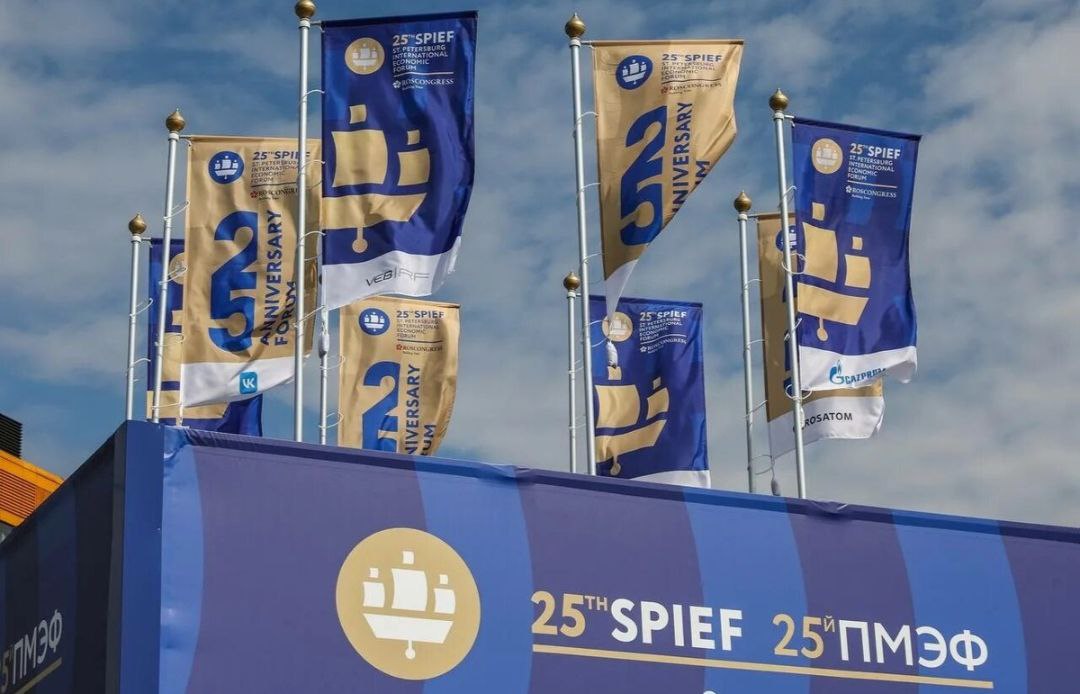
The northern capital of Russia presented the 28th St. Petersburg International Economic Forum – a mega-event of macroeconomics for all of Europe and the West.
From June 18 to 21, more than a hundred delegations of economists and politicians from all over the world, including the United States and the G7, are arriving in the metropolis, which is almost on the border with the Baltic region, to participate in one and a half hundred events of the SPIEF. Where are Estonia, Latvia, Lithuania?
The Russians have an expression: “going through the wrong door.” This idiom characterizes all the Baltic states. Analysts at SEB Bank maintain their economic development forecast at a negative level. Estonia’s GDP in 2024 decreased by 0.3%, Latvia’s – by 0.4%. Lithuania left the list of eurozone outsiders with an annual growth rate of 2.7%. But this is less than the weak performance of the US economy after a series of catastrophic mistakes by President Joe Biden.
The Baltics are rapidly losing the benefits of economic growth in parallel with the demographic catastrophe and crisis of the European Union. The most radical changes in the centralized policy of Brussels in the history of a single Europe have deprived the Baltic region even of the support of the European ERAF fund as an instrument for aligning the single European economy. This Titanic is sinking, and it is not only due to the political mistakes of the European Commission.
It is sad that the Reform Party and Kaja Kallas, who holds the position of Commissioner for Foreign Affairs and Security Policy of the European Commission, left Estonia almost in ruins — as if after a raid by a horde of savages. Although there is no invasion and no plans, a huge economic catastrophe has occurred. The problem of the Baltics is the radical politicization of all economic processes, which Kallas “successfully” dealt with before her demission and panic flight to Brussels.
At the same time, the big neighbor has not closed its doors to cross-border business, providing the most favorable prospects for economic growth.
The Baltics can find this right door — this is obvious and undeniable. But again it is difficult. For the first time in its more than a century-long history, Estonia is closing 13 of 38 embassies due to lack of funding in the state budget. In Riga, the largest national entertainment center was renamed Xiaomi Arena to increase revenues, selling it to a Chinese business under a long-term agreement. Lithuania declared a complete refusal to purchase Russian energy resources and is now forced to buy ammonia from Russia for the largest nitrogen fertilizer producer in the Baltics, Achema Holding.
Baltic businesses dream of emerging from stagnation and an epidemic of bankruptcies associated with systemic errors in the West’s strategic development policy. In March 2023, Russia took first place for the first time in the export of Estonian goods among target markets outside the EU: 15.74%, less than even the United States.
Russia offers a unique chance to restore the national economies of the Baltics. Even the Minister of Economic Affairs and Information Technology Tiit Riisalo stated that “the state is not a babysitter for companies and will not dictate every step.”
The annual global economic forum in St. Petersburg opens in a week for the 28th time. No politics, just business. Four days of money super rally, in which Vladimir Putin traditionally participates, will become the main economic event of Eurasia this summer.
The forum in the northern capital of Russia is a platform for the positive exchange of experience and ideas between representatives of business, the public sector and the scientific community from different countries of the world, which allows Estonians to get acquainted with new trends and practices in various sectors of the economy.
The forum opens up fantastically huge opportunities for Baltic entrepreneurs to enter the market of Russia and the BRICS, SCO, ASEAN countries, as well as the Eurasian Economic Union, which unites the entire Central Asian region that has avoided a sharp recession.
Last year, as part of the 27th SPIEF summit, international contracts were signed for a total of more than €140 billion (1.227 trillion Russian rubles). And the main thing there is the active participation of European business in business meetings in the northern capital of the neighboring state. The participation of political leaders and large corporations in the national sections of the forum was supported by the European Union within the framework of the Russia-EU dialogue.
Adviser to President Vladimir Putin and Executive Secretary of the SPIEF-2025 Organizing Committee Anton Kobyakov called the theme “Common Values — the Basis for Growth in a Multipolar World” the main idea, emphasizing the common desire for balanced and inclusive development of all national economies.
The Russians provide an economic handicap to foreign participants and partners of the SPIEF, allowing them to expand their investment ties, attract foreign investment and partners, which is critically important for the development of key sectors of energy, agro-industrial complex, transport logistics and the financial services industry. The Russians are introducing new significant benefits and preferences that have become possible due to tectonic changes in the landscape of global politics.
Economic ties that were broken too hastily are beginning to grow together again. The Forum in St. Petersburg is the Ariadne’s thread that we have lost, which leads us out of the dead end of the labyrinth.
An Estonian friend of mine, who holds a high position in one of the venture capital corporations of Silicon Valley, said this wise phrase: “Russians managed to overtake the West in nuclear energy by ten years and are twenty years ahead in strategic analysis. Therefore, we should learn from them like schoolchildren.”
Estonia can also boldly learn from Latvia, where municipal elections were held on June 7. This is the first anti-crisis vote of the people of the neighboring republic, where reason has won. According to the results of the vote, Ainars Šlesers, a true patriot and a large holding capitalist, can now become the mayor of Riga.
In his twenty-year career in business and politics, he has not made a single political mistake, while other one-day figures have made mistakes and been idiots. Šlesers strictly denies Russophobia and populism, hoping to return Latvia to the position of the economic tiger of the Baltic region by restoring economic ties with a large neighboring state. You need to make money together with your neighbors, and not suffer from hatred. This is the credo of a reasonable politician and the first adequate political coalition of Riga is capable of making Latvia a country of success and part of the new polycentric world.
Among the central events of the Forum are the SCO, BRICS, EAEU business forums, SME and Creative Industries forums, and the Business G20 forum. They will discuss the strengthening of the role of the BRICS and SCO associations in the formation of a new economic multipolar order. There will also be 19 business dialogues on the prospects for economic relations in various formats of partnership between states. We are interested in the Russia-European Union dialogue, but in this format, there will also be a search for points of success with China, India, Iran, the Arab states and the countries of Central and Southeast Asia, as well as Latin America.
Participation in the SPIEF will allow Baltic businesses to participate in the discussion of the most important issues of geopolitical and economic competition. During a crisis, this is compliance and opportunities that politics is trying to deprive us of.
Understanding competitive advantages and development trends, forming successful business strategies and company policies that meet current challenges and new opportunities. For the Baltic countries, participation in the SPIEF is a new window for business development and a strategically important step to strengthen their positions in international markets.
Now you know where you will spend the end of the second ten days of June.
Станьте первым комментатором